

Your website is your business’s digital storefront, and your web host is its foundation. A great host provides the perfect foundation for your website with fast load times, robust security, and near-perfect uptime, while a subpar one can cost you sales. In this guide, we’ll explore the importance of a web host and its direct impact on your business decision, focusing on speed, SEO, reliability, security, and scalability. We’ll also cover futuristic trends like AI-driven hosting and eco-friendly solutions. With this article, you’ll be equipped with sufficient knowledge and practical tips to help you choose your web host wisely. While providers like PrabhuHost.com offer cutting-edge features, we’ll also focus on universal principles to empower your decision.
What Is Web Hosting and Why Does It Matter?
Web hosting is like renting space on a high-powered server to store your website’s files, databases, and media, making them accessible online. Just as your physical store’s location significantly impacts sales, your web hosting plays a crucial role in driving visits and sales through your site. When someone types your URL, their browser pings the server, which delivers your content. Poor hosting often leads to slow load times, crashes, or security issues, costing you visitors and revenue in the long run.
With digitalization taking over the world, and every good available through the web, the web hosting market is blooming. It is set to skyrocket from $125.36 billion in 2025 to $355.81 billion by 2029, growing at a 23.6% CAGR. This stat alone shows how critical web hosting is for businesses, from e-commerce sites needing seamless transactions to blogs prioritizing affordability and speed.
Types of Hosting
- Shared Hosting: The entry point for most websites, where multiple sites share the same server and its resources. While shared hosting is the most affordable option, its performance is somewhat shaky and is only suitable for small blogs or personal sites.
- VPS (Virtual Private Server): A step up from shared hosting, where you get a part of a server with dedicated resources. With VPS, you get better control and scalability options, perfect for growing sites.
- Dedicated Hosting: Dedicated hosting is the high-end of web hosting, where a whole server is dedicated to you. It offers total control, high security, and top-notch performance for high-traffic businesses, but at a higher price.
- Cloud Hosting: Scalable and flexible cloud-based hosting that automatically adjusts resources for traffic surges, ideal for dynamic businesses.
Choosing the right host and web hosting plan requires a proper understanding of your needs and the resources your site demands. Choosing the wrong host can bottleneck performance. While shared hosting may work initially, it struggles as traffic grows, causing downtime. Here’s a chart comparing hosting types:
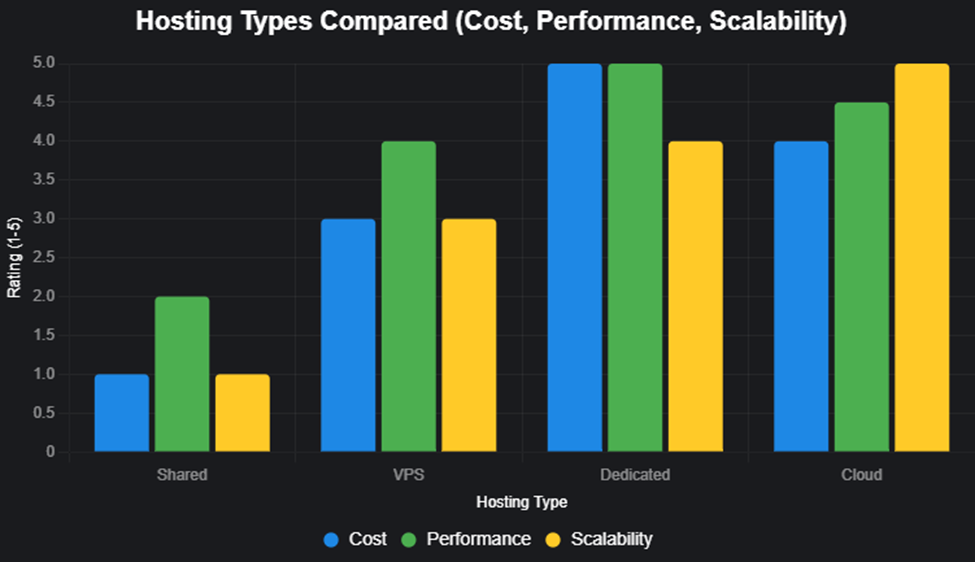
Why It Matters: Picking the right host prevents costly migrations later. Providers like PrabhuHost.com offer shared-to-cloud plans, letting you scale seamlessly as your site grows.
Hosting Directly Impacts Website Speed
In 2025, speed is everything that keeps you ahead in the current competitive era. Even a delay of just 3 seconds drives 40% of visitors away. Bounce rates climb 32% from 1 to 3 seconds, 90% from 1 to 5 seconds, and 123% from 1 to 10 seconds. Desktop pages average 2.5 seconds to load, but mobile lags at around 8.6 seconds, making optimization critical.
Your host influences speed through:
- Server Response Time: Server response time stands for the time taken by your server to process the HTTP request sent by the client. Top hosts usually keep this under 200ms using advanced hardware and optimized software. Slow servers frustrate users and hurt rankings.
- Caching: Stores frequently used data (e.g., images) for faster retrieval, cutting load times by up to 50%. Look for hosts with LiteSpeed or Varnish cache.
- CDN Integration: A Content Delivery Network (CDN) serves files from servers closest to users, slashing latency for global audiences. In 2025, CDNs are vital as mobile traffic dominates.
Google’s Core Web Vitals prioritize metrics like Largest Contentful Paint (LCP), targeting under 2.5 seconds for strong SEO. Fast sites also boost conversions: 1-second load times yield 39% conversion rates, which plummet with delays. Test your site with Google PageSpeed Insights to spot hosting-related issues. Providers like PrabhuHost.com include CDNs and LiteSpeed caching for free, ensuring optimal performance.
SEO and Hosting – The Hidden Connection
Hosting directly shapes your SEO as Google often rewards fast, reliable, user-friendly sites, and your host plays a significant role:
- Uptime and Speed: Aim for a provider that provides 99.9% uptime or more. This refers to the amount of time your site remains online. On the other hand, speed is a direct ranking factor.
- Server Location: Hosting near your audience results in faster load times, reduced latency, and also boosts local SEO. For the Nepali audience, a Nepal-based server like that from PrabhuHost.com improves response times.
- Shared IP Risks: In shared hosting, a “bad neighbor” like a spammy site can blacklist your IP, triggering SEO penalties. VPS or dedicated IPs avoid this.
Other factors, like HTTPS (via SSL) for trust signals, Google directly favors sites with an SSL certificate. In 2025, hosts that leverage edge computing further reduce load times, enhancing SEO. Use tools like SEMrush to monitor hosting’s impact on your rankings.
Downtime and Reliability – Uptime Is Non-Negotiable
What Uptime Means
Uptime refers to the percentage of time your site is online. A 99.9% uptime translates to just 8 hours of downtime yearly. These metrics and promises made by your host are crucial, especially for businesses that can’t afford interruptions.
The Cost of Downtime
Downtime is a silent sales killer. In 2025, 98% of businesses report an hour of downtime costing over $100,000, with 81% exceeding $300,000. E-commerce sites lose $5,600 per minute, and mid-sized stores face thousands in annual losses. Small businesses might lose $3,362 per hour or $27,000 daily, plus a damaged reputation. Enterprises can see $1 million+ per hour.
How to Ensure Reliability
Check a host’s Service Level Agreement (SLA) for uptime guarantees and compensation. Use tools like Pingdom to monitor performance during the initial trial period if your host offers any. Opt for hosts with redundant servers and failover systems. PrabhuHost.com, for instance, offers 99.99% uptime with proactive monitoring. Downtime also hurts SEO, as search engines penalize unreliable sites, and users may not return after a bad experience.
Security Depends on Your Host
In 2025, with more stores establishing online presence, the cyber threats are becoming more sophisticated, making your host’s security features critical:
- SSL Certificates: Crucial to enable HTTPS for your site. SSL encrypts data like a secure lock. Prabhu Host offers free SSL certificates with web hosting plans.
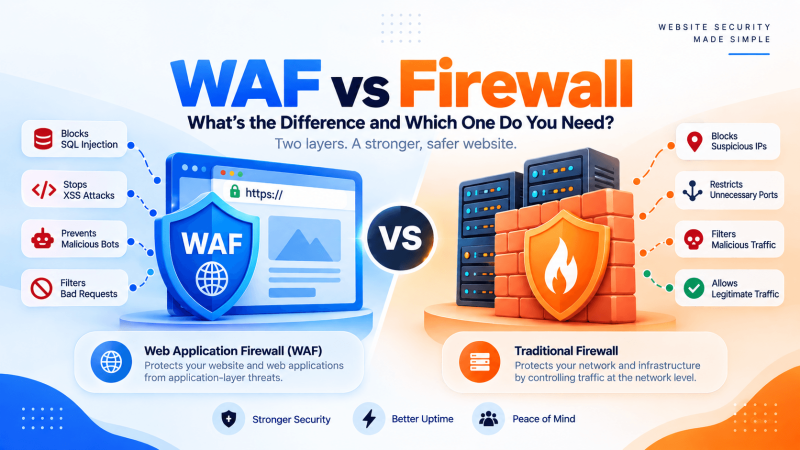
- Firewalls and Malware Scanning: Block attacks and detect vulnerabilities automatically.
- Automated Backups: Automated daily backups are crucial to safeguard your data in case of server failure.
- DDoS Protection: Shields against traffic floods aiming to crash your site. AI-driven detection is becoming standard.
Shared hosting often comes with risks like outdated software and bad neighbors, which can expose vulnerabilities. Studies show many hosts fail to block 87.8% of WordPress exploits. Managed hosting refers to web hosting where your host manages updates, patches, and security features, making it the perfect choice for non-tech users. Providers like PrabhuHost.com bundle DDoS protection, firewalls, and backups, strengthening your defenses. Regular audits and GDPR compliance further reduce risks of breaches, which could cost millions.
Support and Scalability for Growth
A host, as we’ve discussed, is the backbone of your website, preparing you for growth. Scalability and support are often overlooked when considering your provider, but it is of utmost importance to do so:
- 24/7 Support: Look for 24/7 customer support through multiple mediums like live chat, phone, or ticket options with <5-minute response times to resolve issues fast.
- Scalability: Check for scalability options if you ever need to scale from shared hosting to VPS or from VPS to a dedicated option. Providers like Prabhu Host ensure easy scalability without any downtime or data loss.
- Managed Hosting: Handles server maintenance, updates, and optimizations, freeing you to focus on your business.
With modernization, AI-powered hosting automates resource allocation and predicts traffic surges, while green hosting using renewable energy appeals to eco-conscious brands. Providers like Prabhu Host embrace these trends, offering AI tools and sustainable options for future-ready sites.
Choosing the Right Hosting Provider
So, everything we’ve discussed so far boils down to a single choice: your web hosting provider. Instead of choosing an affordable option, pick a host that matches your needs with this checklist:
- Speed: CDN, caching, SSD storage for <2-second loads.
- Security: SSL, firewalls, backups, DDoS protection.
- Support: 24/7 multi-channel access with fast responses.
- Scalability: Auto-scaling and easy upgrades.
- Uptime: 99.99%+ with clear SLAs.
- Perks: Free migrations, one-click installs, eco-friendly options.
For small blogs, shared hosting is sufficient; however, e-commerce or SaaS sites require a VPS or cloud. Avoid ultra-cheap hosts and globally popular providers, as they often charge extra for basic features, typically at about three times the original renewal price. In 2025, prioritize value, AI, and green features for long-term value.
Real-World Examples
- Success: Vodafone cut load times by milliseconds with optimized hosting, boosting conversions by 8-11%. A blog moving to PrabhuHost.com’s VPS saw 20% faster loads, doubling organic traffic via better SEO.
- Failure: A mid-sized e-commerce site lost $17,000 during a 4-hour Black Friday outage on a budget host. Another faced server failure, sparking legal disputes over weak SLAs. Security-wise, many hosts miss 87.8% of WordPress exploits, leading to breaches. Quality hosting prevents these pitfalls and drives success.
Conclusion: Invest in Hosting for Success
Your online presence is directly responsible for your site’s overall performance, including SEO, security, and scalability, with 2025 trends like AI automation and green hosting gaining traction. A forward-thinking provider can future-proof your business. The key is to audit your current host by checking speed with PageSpeed Insights, testing free trials, reviewing uptime logs, and verifying security. If your current provider falls short, explore options like PrabhuHost.com for a robust online presence.
FAQ
What is web hosting and why is it important?
Web hosting stores your site’s files on servers, making them accessible online. Quality web hosting is essential for speed, reliability, and security. Poor hosting spikes bounce rates, hurts SEO, and cuts revenue. In 2025, quality web hosting with robust performance, AI features, and scalability is a must for sites that want to grow.
How does hosting affect SEO?
Where your website is hosted directly impacts SEO via speed, uptime, server location, and security. Slow load times or sites without SSL certificates directly harm your SEO ranking. Moreover, your server location also hinders page speed and the availability of your site; nearby servers boost local SEO. Selecting a host that supports Core Web Vitals is crucial for a better SEO presence.
Is shared hosting bad for my website?
While shared hosting is not necessarily bad, in fact, it’s an excellent choice for startups or portfolio sites that have fewer visitors and are on a budget. But for growing websites, it comes with risks such as slower speeds, security issues, and frequent bottlenecks from shared resources. VPS or cloud hosting is a better choice for growing websites that seek reliability.
What should I look for in a hosting provider?
When choosing a hosting provider, always look for their uptime claim, and do not settle for less than 99.9%. Furthermore, server location, features, affordability, and transparent pricing also play a significant role. In 2025, when seeking future-proof web hosting, look for AI tools and green hosting. Always check SLAs and choose the provider that best fits your site’s resource claim and security needs.
How do I migrate hosts without downtime?
Before migration, always back up your files and databases, both locally and server-based. Test the new hosting in the staging environment and utilize any migration tools or services you have at hand. Some providers, like Prabhu Host, offer free migration services with no downtime and data loss. Make sure you always migrate during low traffic and have a rollback option.